
Assisted Living vs. Memory Care: How Central Valley Families Can Choose the Right Level of Support
For families in Modesto, Oakdale, Riverbank, and across the Central Valley, deciding between assisted living and memory care can feel urgent and emotionally difficult. Both options can provide housing, meals, personal assistance, social connection, and around-the-clock supervision. The distinction is not a measure of a loved one’s worth or independence. It is a question of which environment and care approach can safely support the person’s current needs while respecting their routines, abilities, and preferences.
A good starting point is to look beyond labels. California generally licenses non-medical residential care for older adults as Residential Care Facilities for the Elderly (RCFEs), a category that includes many settings families call assisted living or board and care. RCFEs provide basic services such as care and supervision, safe accommodations, meals, assistance with daily activities, observation of residents’ condition, and planned activities. The services a particular home can provide may vary, so families should ask how a community will meet the specific needs of their loved one.
The short version: Assisted living may be a good fit when a person needs regular help with daily life but can safely benefit from a less dementia-specialized setting. Memory care may be more appropriate when memory changes create an ongoing need for structured routines, specialized dementia support, and a secure environment. A diagnosis alone does not determine the answer.

What assisted living and memory care often have in common
Both care options can relieve the practical burdens that make living alone difficult. Depending on the community and a resident’s care plan, that can include prepared meals, housekeeping, medication assistance or reminders, help with bathing and dressing, mobility support, activities, and transportation arrangements. Both should begin with an honest assessment of the individual’s needs and a clear explanation of services, staffing, costs, and policies.
Both can also help a loved one remain connected. A move should not be viewed only through the lens of what someone can no longer do. The right setting can make it easier to share meals, take part in familiar activities, receive prompt help, and spend time with family without every visit becoming a caregiving shift.
For a local overview of daily support and community life, see Graceful Living’s page about assisted living in Modesto and Oakdale. You can also explore additional family guides in Senior Care Resources.

When assisted living may be the better fit
Assisted living may be a strong option for an older adult who needs dependable help with activities of daily living but remains comfortable in a community setting that is not designed primarily around dementia. Common needs may include help with bathing, dressing, toileting, transfers, meals, housekeeping, medication routines, or transportation.
The key question is safety. Can your loved one navigate the setting, communicate when they need help, and participate in daily life without an ongoing risk of getting lost, leaving unsafely, or becoming severely distressed by confusion? Some people with mild or early memory changes may do well in assisted living when the home’s assessment and care plan match their needs. Others may need more specialized support sooner. The best answer comes from current day-to-day patterns rather than a diagnostic label alone.
On a tour, ask how the home assesses cognition, mobility, nighttime needs, fall risk, and medication routines. Ask how it will communicate with family if those needs change. California’s consumer guide advises families to compare a person’s individual needs and preferences with a facility’s actual services, layout, staffing approach, and activities—not only its general description.
When memory care may be the safer level of support
Memory care is a form of residential support designed around the needs of people living with Alzheimer’s disease or other dementias. Memory-care settings can be separate communities, or they can be specialized units within an assisted-living residence. The Alzheimer’s Association explains that these special care units may offer trained staff, specialized activities, and support for behavioral needs; families should ask specifically what is available because services and requirements vary.
Memory care may become the right next step when memory loss affects safety or makes ordinary routines unusually hard to manage. Families may notice repeated disorientation in familiar places, wandering or attempts to leave unsafely, unsafe use of appliances, frequent nighttime wakefulness, escalating anxiety, difficulty recognizing risks, or an inability to get help promptly after a fall or other emergency. A sudden change in memory or behavior deserves medical attention, because it may have a treatable cause.
The goal of memory care is not to restrict a person unnecessarily. A well-matched program uses predictable routines, dementia-informed communication, purposeful activities, and a layout that supports calm movement and familiarity. It should also promote the abilities that remain, rather than focusing only on limitations.
Graceful Living describes its memory care in Modesto, Riverbank, and Oakdale as a secure, supportive approach for older adults with Alzheimer’s disease and other forms of dementia. Families who want to understand the community’s care approach can also review its comprehensive memory care services.
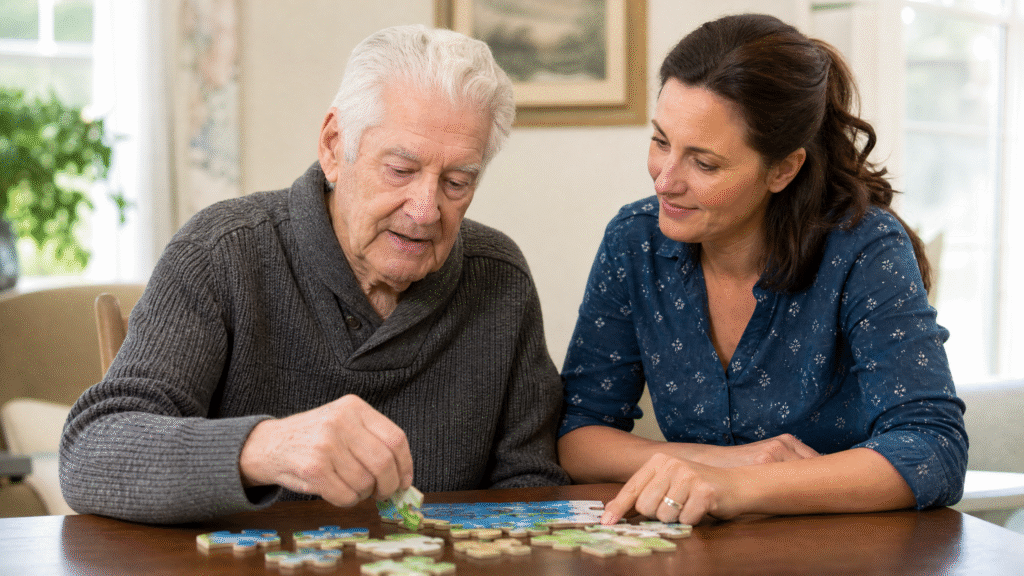
Five questions that clarify the right level of support
1. What happens on an ordinary day, and where does help break down?
Make a simple list of the moments that have become difficult: getting dressed, preparing meals, taking medicines, using the phone, getting to appointments, managing stairs, sleeping through the night, or staying oriented outside the home. A pattern is more informative than one isolated mistake.
2. Is there a safety concern that requires a more secure setting?
Look for risks that cannot be managed consistently at home or in a less specialized setting. This may include wandering, leaving doors unlocked, becoming lost in familiar areas, unsafe driving, falling without being able to call for help, or becoming frightened and disoriented at night. If your loved one has a recent or sudden change, speak with a qualified health professional promptly.
3. Does the person benefit from familiar routines and dementia-specific communication?
People living with dementia may respond differently to noise, unfamiliar schedules, crowded spaces, or complex instructions. Ask a prospective community how caregivers respond to distress, how they adapt activities to a resident’s abilities, and how they maintain familiar preferences around meals, bathing, sleep, hobbies, language, and family visits.
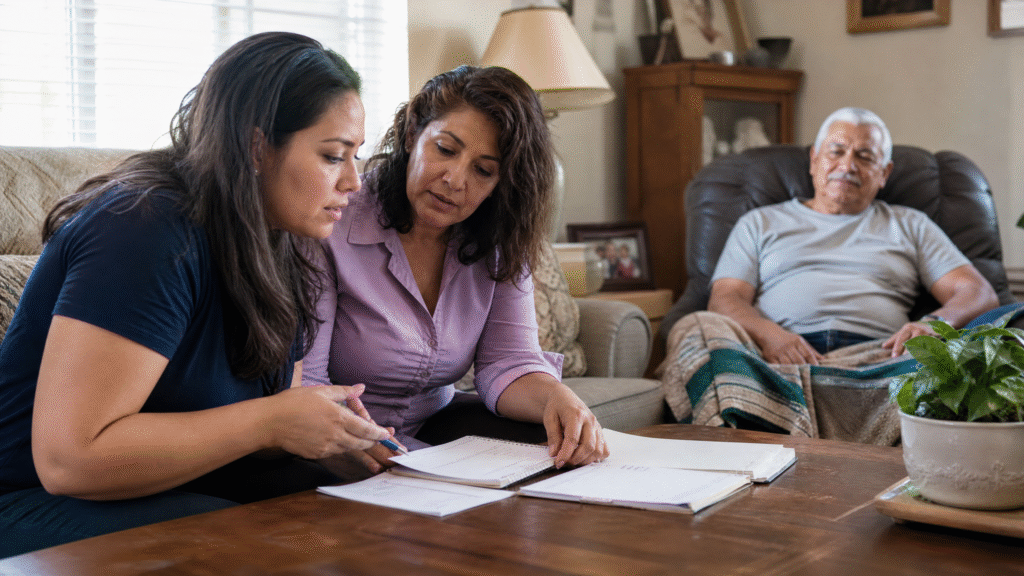
4. Can the community meet needs if they change?
Needs can change after a hospitalization, fall, or progression of a condition. Ask what reassessment looks like, which changes the community can accommodate, and what circumstances would require a transfer or discharge. The Alzheimer’s Association recommends asking how care is personalized, how families are informed of changes, how staff handle challenging behaviors, and whether the setting can continue care as needs change.
5. Can the family realistically sustain the present plan?
A move is not a failure by a family caregiver. It may be the responsible response when the care needed exceeds what one person can safely provide. The Alzheimer’s Association encourages families to consider whether the person is safe, whether caregiver health is at risk, whether care needs exceed physical abilities, and whether more structure and social interaction would help.
How to compare communities in the Central Valley
Visit more than one home, and visit at different times of day if possible. Observe a meal, an activity, and the way staff speak with residents. Ask to see the current licensing information, the admission agreement, a written description of fees, and a clear explanation of what is included in the base rate. California advises families to verify that a facility is licensed and to review its available licensing information rather than relying only on online descriptions.
For memory-care options, ask whether staff receive dementia-specific training, how the home responds to wandering or distress, whether outdoor spaces are secure, how family members participate in care planning, and how the environment supports wayfinding and calm routines. Ask about the staff presence during the day, evening, and overnight. There is no single question that decides the outcome; the goal is to understand whether the actual care plan, environment, and communication style fit your loved one.

A decision can be made with care—not haste
Choosing between assisted living and memory care is a process. Involve your loved one as much as possible, share observations with their health care provider, and bring the same written questions to every tour. A thoughtful comparison now can reduce uncertainty later and create a more stable transition for the whole family.

Graceful Living serves families in Modesto, Oakdale, and Riverbank with residential assisted living and memory-care support. To discuss a loved one’s needs or schedule a tour, call 209-595-1028 or use the Graceful Living contact page.
This article is for general educational purposes and is not medical, legal, or financial advice. A qualified health professional should help evaluate sudden changes in memory, mobility, health, or behavior. In an emergency, call 911.